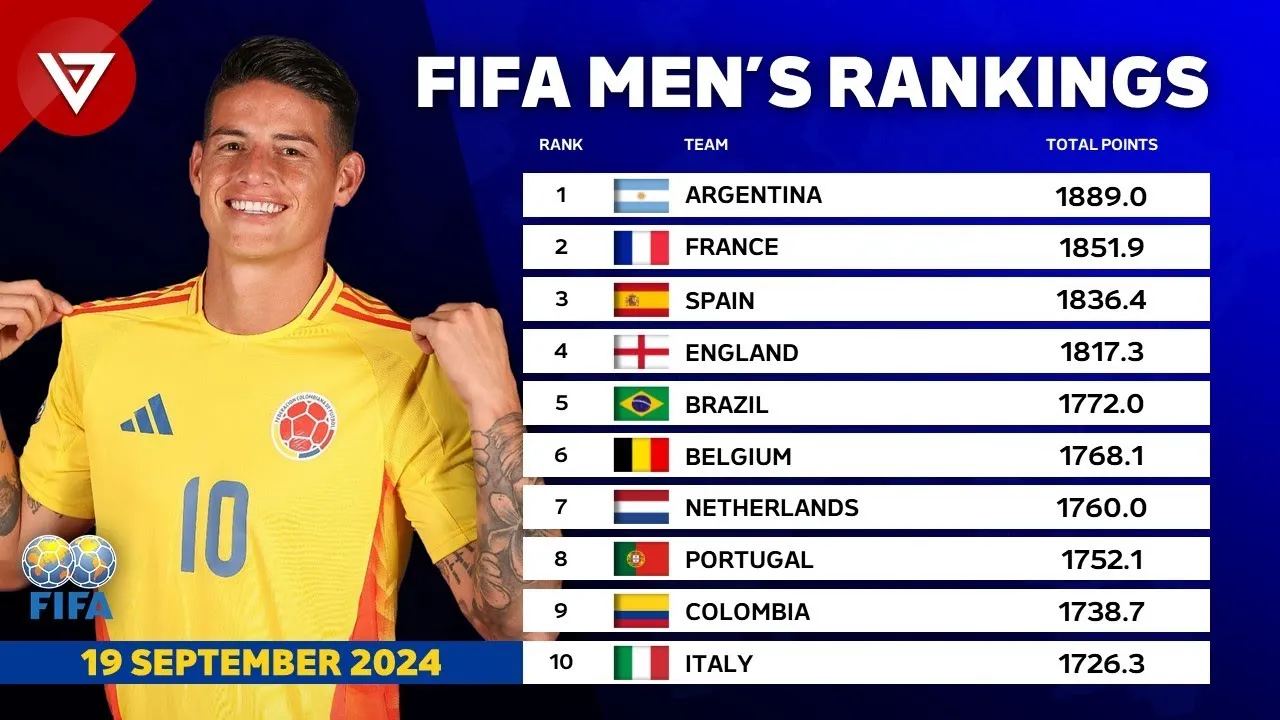
National team rankings have become one of the most discussed topics in global football, influencing fan debates, tournament seedings, media narratives, and even national pride. From casual fans checking where their country stands to analysts dissecting ranking algorithms, these rankings shape how we perceive international football strength.
In this in-depth guide, we’ll explore what national team rankings are, how they work, why they matter, and how they affect football on and off the pitch. This article is designed with EEAT principles in mind—providing expertise, authority, trustworthiness, and real-world context.
Table of Contents
ToggleWhat Are National Team Rankings and Why Do They Matter?
National team rankings are official or semi-official systems that rank countries based on their performance in international football matches. These rankings reflect results in tournaments, qualifiers, and friendly matches, helping determine which teams are considered the strongest in the world.
For fans, rankings fuel endless debates about which nation truly dominates football. For governing bodies like FIFA, they serve a practical purpose—determining tournament seeding, drawing groups, and allocating competitive advantages.
Imagine two teams preparing for a World Cup qualifier. A top-ranked team enters with confidence, strong sponsorships, and high expectations, while a lower-ranked team may struggle to attract talent and funding. Rankings influence perception, and perception often influences reality.
The History Behind Global Football Rankings
The concept of ranking national teams is not new. FIFA introduced its first official ranking system in 1993 to provide a structured way to compare international teams. Before that, rankings were mostly media-driven or based on subjective opinions.
Over time, FIFA refined its ranking methodology, responding to criticism about fairness and accuracy. The modern ranking system uses a points-based algorithm that considers match results, opponent strength, and match importance.
Other organizations, such as Elo ratings, also provide alternative ranking systems, often praised for their predictive accuracy. However, FIFA rankings remain the most recognized worldwide.
How National Team Rankings Are Calculated Today
Understanding how rankings are calculated helps explain why teams rise or fall unexpectedly. Modern ranking systems consider several key factors.
Match results play the biggest role. Wins earn points, draws earn fewer points, and losses can reduce points depending on the opponent’s strength. Beating a top-ranked team yields more points than beating a lower-ranked team.
Match importance also matters. World Cup matches carry more weight than friendly matches. Continental tournaments like the UEFA European Championship or Copa América also significantly influence rankings.
Opponent strength is another crucial factor. Defeating a strong team boosts rankings more than defeating a weaker one. Home and away performance can also influence calculations.
This dynamic system ensures rankings reflect recent performance rather than historical reputation.
The Psychological Impact of National Team Rankings
National team rankings influence psychology in football more than many people realize. Players often mention rankings in interviews, using them as motivation or validation.
For fans, rankings can boost national pride. A top-ten ranking can spark celebrations across a country, while a sudden drop can lead to criticism of coaches and federations.
Media coverage also amplifies rankings. Headlines like “Country X climbs into top five” create narratives that shape public perception, sometimes regardless of actual on-field performance.
National Team Rankings in Tournament Seeding
One of the most practical uses of rankings is tournament seeding. Major competitions use rankings to seed teams into different pots during draws.
Higher-ranked teams are usually placed in favorable positions, avoiding other top teams in early stages. This can significantly impact a team’s tournament journey.
For example, a top-ranked team may face weaker opponents in the group stage, increasing its chances of advancing. Lower-ranked teams often face tougher competition early on, making their path more challenging.
This system rewards consistent performance and encourages teams to maintain strong rankings.
Controversies and Criticism Around Rankings
Despite their importance, national team rankings have faced criticism over the years. Critics argue that rankings sometimes fail to reflect true team strength.
For example, teams that play fewer matches or avoid friendlies may maintain high rankings, while active teams risk losing points. Some analysts believe the system can be manipulated through strategic scheduling.
Alternative ranking systems like Elo ratings attempt to address these issues by using different algorithms. However, no ranking system is perfect, and debates about fairness continue.
Real-Life Examples of Ranking Surprises
Football history is full of surprising ranking stories. Smaller nations have climbed rankings through consistent performance, shocking traditional powerhouses.
Iceland’s rise in the mid-2010s is a classic example. Through disciplined tactics and team unity, Iceland climbed the rankings and stunned giants at major tournaments.
Similarly, Belgium’s “Golden Generation” led them to top FIFA rankings for extended periods, even without winning major trophies. This highlighted the difference between ranking performance and tournament success.
These stories show that rankings reflect consistency, not just trophies.
The Role of Data and Analytics in Modern Rankings
Modern national team rankings rely heavily on data analytics. Advanced statistical models track every match, goal, and opponent rating.
Football federations now use ranking data to make strategic decisions, such as scheduling friendlies against certain opponents to maximize ranking points.
Media analysts and betting companies also use ranking data to predict match outcomes and tournament results.
Data-driven rankings have transformed football from a purely emotional sport into a field influenced by algorithms and metrics.
How Rankings Affect Sponsorship and Funding
Rankings do not just influence football fans—they impact business. Higher-ranked teams attract more sponsorship deals, broadcasting revenue, and government support.
Sponsors prefer associating with successful teams, as rankings reflect global visibility and competitiveness. A rise in rankings can lead to increased funding for youth development, infrastructure, and coaching staff.
For developing football nations, climbing the rankings can be a turning point, attracting investment and global recognition.
Fan Culture and National Team Rankings
Fans love discussing national team rankings. Social media platforms light up every time rankings are updated, with supporters celebrating or criticizing their national teams.
Rankings also influence rivalries. Fans compare rankings to argue about which country dominates a region or continent.
For example, debates between South American and European fans often reference rankings to support their arguments about football supremacy.
Rankings have become part of football culture, shaping conversations worldwide.
Differences Between FIFA Rankings and Elo Ratings
While FIFA rankings are official, Elo ratings provide an alternative perspective. Elo ratings are based on a mathematical model originally used in chess and adapted for football.
Elo ratings update after every match and consider goal difference and home advantage. Many analysts believe Elo ratings better predict match outcomes.
However, FIFA rankings remain more influential in official tournaments and media coverage. Both systems coexist, offering different insights into team performance.
The Impact of Coaching on Rankings
Coaching plays a significant role in improving national team rankings. A skilled coach can transform a team’s performance, tactics, and mentality.
For example, Jurgen Klopp’s influence at the club level demonstrates how leadership can change football culture. At the national level, coaches like Didier Deschamps and Gareth Southgate have significantly influenced their teams’ rankings.
Coaches who focus on youth development, tactical discipline, and team chemistry often achieve consistent results, leading to ranking improvements.
Youth Development and Long-Term Ranking Success
Sustainable success in rankings requires strong youth development systems. Countries like Germany, Spain, and France invest heavily in academies and grassroots football.
Young players developed through structured programs often transition seamlessly into national teams, ensuring consistent performance over decades.
This long-term approach keeps teams competitive and maintains high rankings, even during generational transitions.
The Influence of Domestic Leagues on National Rankings
Strong domestic leagues contribute to higher national team rankings. Competitive leagues develop skilled players who perform well internationally.
For example, England’s Premier League, Spain’s La Liga, and Germany’s Bundesliga produce world-class talent that strengthens national teams.
Smaller leagues can also influence rankings if they focus on player development and export talent to top leagues.
Domestic football infrastructure is directly linked to international success.
Media and Public Perception of Rankings
Media plays a crucial role in shaping how people view rankings. Headlines, TV debates, and online articles analyze every ranking update.
Sometimes, media narratives exaggerate ranking changes, creating pressure on players and coaches. A slight drop in rankings can lead to public criticism, even if performance remains stable.
Understanding the context behind rankings helps fans and media interpret them more accurately.
Rankings vs Tournament Success: What Matters More?
One common debate is whether national team rankings matter more than tournament trophies. Rankings reflect consistency, while trophies represent peak performance.
A team may rank highly but fail to win tournaments, while another may win a tournament and still rank lower due to inconsistent results.
Both metrics are important. Rankings show long-term strength, while trophies define football legacy.
Future Trends in National Team Rankings
The future of national team rankings will likely involve more advanced analytics, artificial intelligence, and real-time updates.
With technology evolving, rankings may incorporate player tracking data, performance metrics, and predictive models.
Fans may soon access interactive ranking dashboards with detailed insights into team performance, making football analysis more transparent and engaging.
How Fans and Analysts Use Rankings Today
Fans use rankings to follow their team’s progress, compare nations, and predict match outcomes. Analysts use rankings to evaluate team strength, coaching impact, and tactical evolution.
Betting companies, journalists, and football federations all rely on ranking data for decision-making.
Rankings have become a central reference point in modern football discussions.
The Emotional Connection Behind National Rankings
Beyond data and algorithms, national team rankings carry emotional significance. For many fans, seeing their country climb the rankings feels like a national achievement.
Football is deeply connected to identity and culture. Rankings symbolize a nation’s footballing journey, reflecting years of effort, talent, and passion.
For smaller nations, entering the top 50 or top 100 can be a historic milestone, celebrated across the country.
Why National Team Rankings Will Always Matter
Even with criticisms and limitations, rankings remain an essential part of football. They provide a structured way to compare teams, influence tournaments, and shape global football narratives.
As football continues to evolve, rankings will adapt, incorporating new technologies and methodologies. However, their core purpose will remain the same: measuring international football performance.
National team rankings are more than numbers on a list. They represent history, strategy, passion, and national pride. From tournament seeding to fan debates, rankings influence every aspect of international football. Whether you are a casual fan or a football analyst, understanding rankings adds depth to how you experience the beautiful game.